How instant bank payments reduce risk and improve business transactions
.jpg)
Payments
December 4, 2025
|
Nick Rudy
Time is money isn’t just a turn of phrase. The time between when a customer pays and when the money settles actually has a measurable impact on your business. The longer this process takes, the more risk is introduced, which costs real dollars in operational overhead.
When selecting a payment option, you may find yourself asking:
What if the customer’s available funds change?
What if they cancel the transaction?
What if I need access to funds right away?
That’s why settlement speed (how quickly money moves from “pending” to “settled”) has become an important focus for emerging payment services.
This is especially true for bank to bank transactions.
Traditional ACH payments are processed in batches during normal banking hours. That means a payment initiated at 5 pm on a Friday may not settle until the following Monday or Tuesday (depending on holidays).
But bank payments are accelerating. 80% of ACH payments now settle in one business day or less via Same Day ACH. At the same time, instant rails are maturing toward a near future with widespread bank availability and adoption across everyday spending.
Instant bank payments are emerging as a preferred payment method for businesses that want speed, security, and control without card fees. The value they bring to the US market is a signal that faster payments will become a vital component of payment optimization going forward.
Let’s look at exactly what instant payment solutions mean for your business and what you can do to get started.
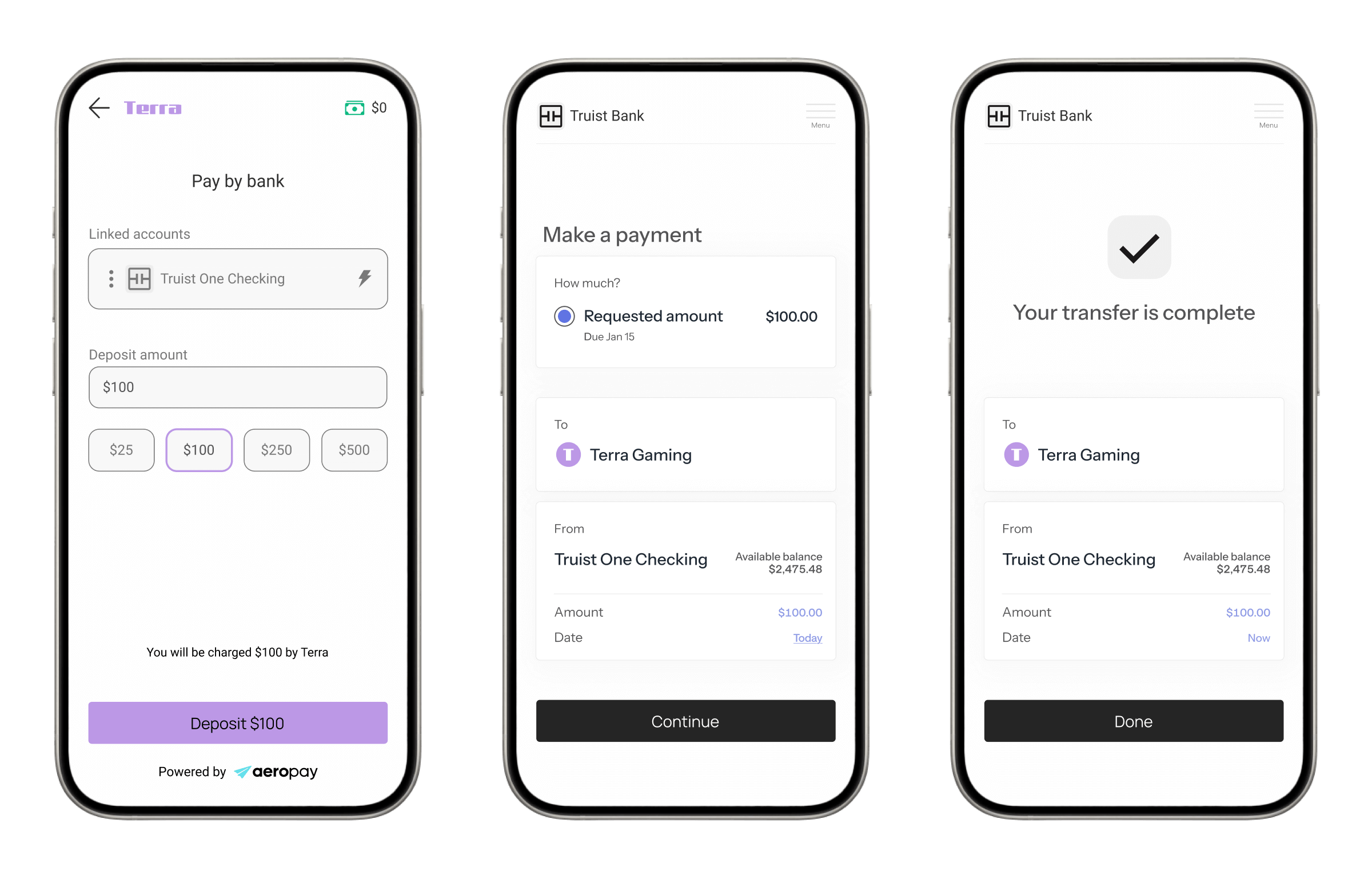
An instant bank payment enables a business to initiate and receive funds that settle within seconds (usually between 5 and 30 seconds). Once a customer authorizes the payment, the money moves directly from their bank account to yours, without batching delays or hold times.
In the United States, instant bank payments happen through:
Outside the United States, instant bank payments are already standard. In Europe, for example, real-time transfers happen through the SEPA Instant Credit Transfer system, which connects banks across dozens of countries.
Global demand for instant payments is one of the many strong signals that the US market will continue to build and expand instant settlement capabilities.
Note: Instant payments are functionally different from instant payouts. Instant payments (or pay-ins) are debit transactions that are initiated by the customer to send money to a business. Instant payouts are credit transactions that are initiated by the business to send money out to a customer, worker, or vendor. Both the RTP® and FedNow® networks support these real-time credits, enabling 24/7 transfers that settle in seconds.
Looking to enable instant bank payments? Get started with Aeropay's Instant Pay-Ins.
Instant bank payments move funds directly from a customer’s bank account to a business account in real time. The process is simple on the surface but built on intelligent infrastructure.
1. Create a payment request.
A business initiates the transaction by adding Instant Bank Pay to its checkout flow or by sending a secure payment link to the customer. The request is transmitted through the RTP® network for immediate payment processing.
2. Customer authorizes the payment.
The customer receives a prompt from their bank and authorizes the payment within their mobile banking app. Authentication occurs through the bank’s own security stack (biometrics, MFA, or passcode verification) ensuring explicit consent before any funds move.
3. Funds settle instantly.
Once approved, the payment is executed and cleared within seconds. Both parties receive confirmation immediately, eliminating the uncertainty and delays common with ACH or card transactions.
Instant payment service providers expose this functionality through a simple API, allowing businesses to embed real-time payments directly into their checkout or app experience.
For businesses, this means each transaction arrives with immediate finality – money that is cleared, confirmed, and ready to use. The result is faster cash flow, lower operational risk, and a more predictable financial environment built on truly real-time settlement.
Instant bank payments combine the speed of real-time settlement with the security of direct bank authorization, improving cash flow, reducing risk, and creating a more predictable payment experience end to end.
Reduced payment risk. Instant settlement removes uncertainty around funds availability and eliminates the waiting period between payment and fulfillment. Because the transaction is verified and authorized by the customer’s bank in real time, the risk of returns or chargebacks is dramatically reduced.
Improved cash flow. Funds arrive and clear in seconds, allowing businesses to access working capital immediately. This improves liquidity and supports better financial planning, particularly for businesses with high transaction volume or time-sensitive operations.
Lower cost of acceptance. By moving money directly between banks, instant bank payments avoid the interchange and network fees associated with card payments. The result is a more efficient, lower-cost alternative that scales sustainably as payment volume grows.
Instant confirmation. Both the business and the customer receive confirmation the moment a payment is completed. This immediate visibility simplifies reconciliation, reduces operational overhead, and gives both parties confidence that the transaction is final.
Higher conversion and satisfaction. A faster, more reliable checkout experience reduces abandonment and builds trust. With 24/7/365 availability, businesses can accept payments anytime without waiting for batch processing.
Built-in security and compliance. Every transaction is protected by bank-level authorization and data security. Real-time balance checks, account verification, and fraud screening occur before settlement, ensuring that only eligible payments move forward.
Together, these benefits translate to faster revenue recognition, fewer operational dependencies, and a more resilient payments infrastructure designed for continuous availability.
Enhanced financial clarity. Instant settlement means no more “pending” transactions or delayed withdrawals. Consumers see their real-time balance before and after each payment, helping them manage budgets and avoid accidental overdrafts.
Greater security and control. Payments are authorized within the consumer’s own banking app – protected by biometrics, passcodes, or one-time codes. This direct authentication process reduces exposure to fraud and keeps sensitive information out of third-party systems.
Better experience. Instant confirmation provides immediate peace of mind. Customers know exactly when a payment has been made and when funds have moved, creating a frictionless experience that feels modern, fast, and transparent.
As instant bank payments become integrated into everyday spending, we’re seeing exciting new use cases come online that help improve customer experience and minimize risk exposure.
Some ideal use cases for instant bank payments include:
Industries like online gaming, trading, and entertainment include stored balances and pre-funding as part of the experience. To keep the customer experience smooth and delight users with instantly available funds, instant bank payments are a valuable addition to the payments stack. Return risk is mitigated with instant settlement and funds are immediately available so customers can bet, trade, stream, or play without skipping a beat.
To fulfill high-value purchases for designer e-commerce goods, vehicle down payments, and home or technology products – businesses need assurance that the funds will settle before delivering their product. With instant settlement, these businesses can immediately fulfill orders and avoid exposure to returned payments.
Customers can instantly fund digital wallets or marketplace accounts using bank transfers that clear in seconds. Instead of waiting for ACH to post, funds are immediately available, giving customers a seamless experience and businesses instant liquidity.
In business and consumer contexts alike, instant payments help eliminate late payments and manual reconciliation. Once the customer approves a payment request, funds are confirmed and settled immediately, improving cash flow and accounting accuracy on both sides.
As instant bank payments continue to expand across the U.S., businesses should be aware of several operational and regulatory considerations.
Instant payments still require adherence to Know Your Customer (KYC) and Anti-Money Laundering (AML) regulations. Because funds move in seconds, real-time identity verification and risk screening are essential. Businesses that use platforms with built-in compliance can maintain speed and convenience without compromising security.
Network coverage for instant payments is growing quickly. The Real-Time Payments network now reaches 71% of U.S. demand deposit accounts (DDAs) with an incremental “technical reach” to financial institutions that hold close to 90% of DDAs, and more financial institutions are joining each quarter. Businesses should choose a provider that can route payments across multiple networks to ensure consistent availability.
Once an instant payment is completed, it cannot be reversed. This finality is a benefit for merchants, as it protects against returned payments and chargebacks. However, as instant payments become more common, stronger consumer protections will be essential. Aeropay is investing in safeguards that protect both sides of the transaction and build consumer trust in pay by bank.
Here’s what you need to do in order to launch and scale instant bank payments successfully:
Start with payments that benefit from immediate settlement, such as deposits, wallet funding, or high-value purchases.
Work with a partner that has direct access to the RTP payment network, along with Request for Payment (RfP) capabilities to ensure transactions settle instantly and securely.
Add Instant Online Banking Payments to checkout or app experiences so customers can authorize payments through their bank and receive instant confirmation.
Show clear transaction status, confirm payments in real time, and use providers with strong security and verification controls.
Track speed, approval rates, and cost savings to quantify impact and guide broader adoption.
Instant bank payments are redefining how money moves in the United States. They combine real-time settlement with verified customer authorization, giving businesses faster access to funds and greater protection against payment risk.
As adoption grows, instant payments will become a standard expectation rather than a new option. Businesses that integrate them early will operate with better cash flow, lower costs, and stronger customer trust.
Next, learn about Aeropay’s Instant Pay-In functionality that powers real-time consumer bank payments across use cases.