Request for Payment (RfP): How to enable instant pay-ins
.png)
Payments
December 1, 2025
|
Joshua Lockhart

Josh is the Chief Technology Officer at Aeropay. He has a rich background in fintech, with previous leadership roles at PayPal, Braintree, and GoFundMe. As a proud Chicago native and problem solver, he's working to transform money movement in America.
Request for Payment (RfP) enables businesses to collect instant bank payments over the RTP® network.
In the United States, money often moves slowly behind the scenes. Payment methods like credit cards and digital wallets can take 1–3 days for settlement, and standard ACH processing is limited to banking hours.
These delays between payment initiation and settlement can disrupt cash flow and create potential for lost revenue due to returned or failed payments. For anyone from small business owners to enterprise organizations, that risk adds up quickly.
The goal of emerging payment systems is to accelerate money movement. One of the primary methods for this is the use of real time payments. Real time payments rails like RTP and FedNow offer always-on instant settlement for credit-push transactions.
While real time payments are widely used for instant payouts, they haven’t been traditionally available for consumer payments (pay-ins).
Now, Request for Payment (RfP) has emerged to enable instant pay-ins. RfP sits on top of the RTP® network so businesses can accept instant consumer payments directly from their bank account.
RfP is an important tool for businesses to accelerate bank payments and remove the risk associated with settlement latency. It combines the speed and availability of the RTP® network with the security of explicit consent.
Below, we’ll break down how RfP works and why it’s valuable for businesses across the United States — especially those looking to streamline their payment process and reduce failed or late payments.
Request for Payment (RfP) is a real-time payment initiation method that lets businesses send a secure request directly to a customer’s banking app. The customer approves the amount, and the payment is pushed and settled instantly, even outside of standard banking hours.
Unlike traditional pull-based payments that can take a day or more to clear, RfP uses a credit-push model. Funds only move after the customer explicitly authorizes the payment inside their bank’s app, adding a powerful layer of security, transparency, and consent.
To trigger this transfer of funds, RfP acts as a messaging layer and facilitator to move money over Cross River’s RTP® network.
The RfP experience is designed to be simple, secure, and real-time. It works like this:
A customer starts a transaction (for example, funding a wallet or making a purchase). The business then creates a Request for Payment through their payment provider or banking partner. The request includes the amount and a reference to the transaction.
The payment request is sent through the RTP® network to the customer’s bank for real-time processing.
The customer’s bank reviews the request, validates account details, and applies RTP/RfP-specific rules to ensure the request is legitimate and actionable.
The customer receives a prompt inside their mobile banking app asking them to approve or decline the payment. They authenticate using their bank’s security methods (biometrics, MFA, passcode).
Once the customer taps “Approve,” the bank pushes a real-time credit payment to the business. Funds settle in seconds.
Both the business and the customer receive immediate confirmation that the payment has been completed.
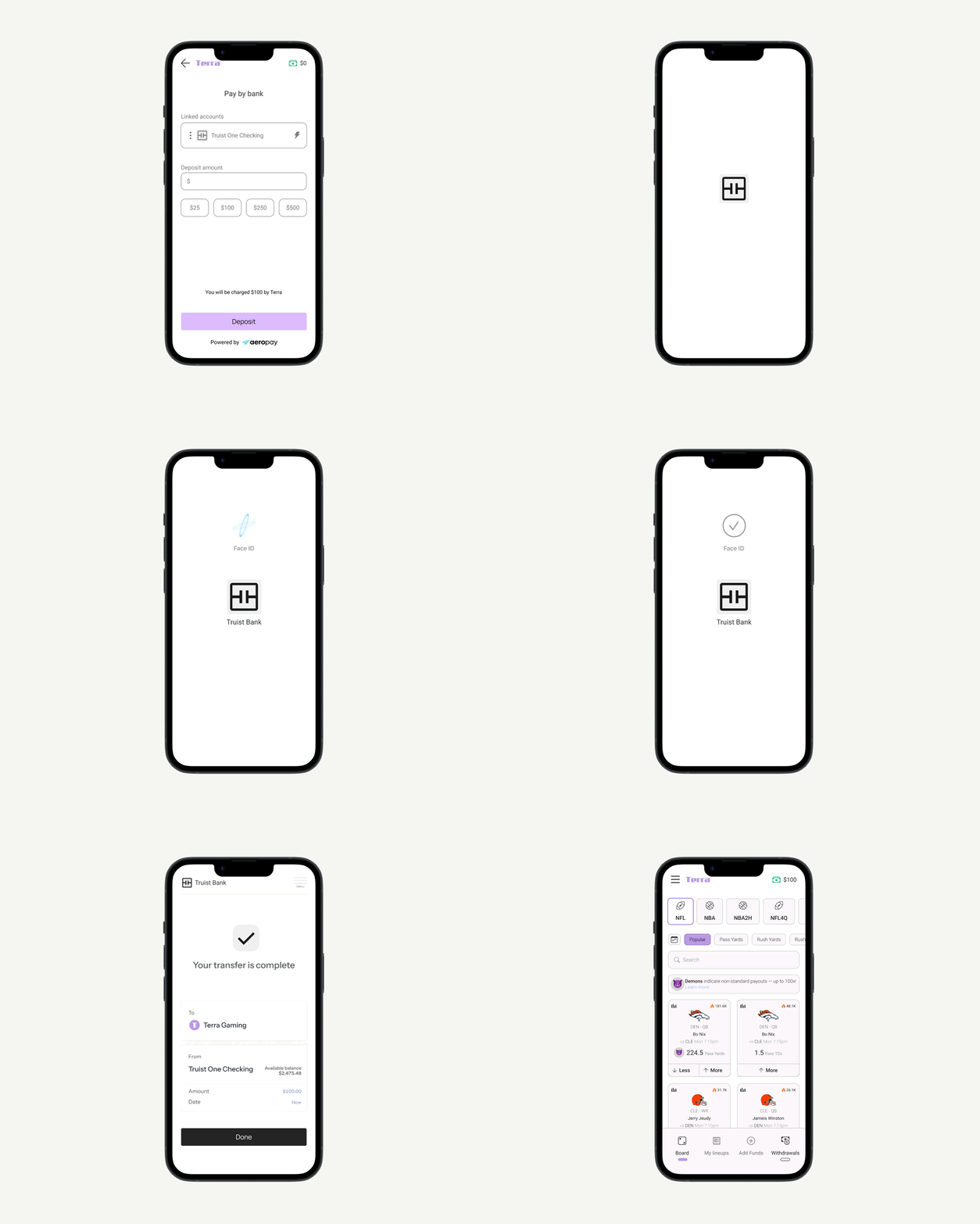
Request for Payment offers a rare combination in financial transactions: speed, security, and control. It solves many of the limitations found in traditional ACH or card-based payments.
Businesses benefit from:
Consumers benefit from:
Request for Payment creates value anywhere speed, certainty, and user control matter. Because RfP enables real-time, customer-authorized credit transfers, it’s especially useful in scenarios that benefit from instant settlement and reduced risk exposure.
Here are a few practical examples:
Fast, reliable account funding is a competitive differentiator in online gaming payments. RfP enables players to instantly top up balances with bank-level authentication and zero credential friction. Because funds settle in seconds (and only after explicit approval) operators reduce risk while offering players a seamless, high-trust deposit experience.
Recurring and invoice-based payments often suffer from delays or failed pulls. With RfP, providers send a secure payment request directly to the customer’s banking app. The customer sees the amount and reference details and pays instantly with one tap. This reduces late payments, improves cash flow, and removes the confusion common with manual billing.
Marketplaces, gig platforms, and fintech apps often need users to fund wallets or accounts before transacting. RfP provides a fast, error-resistant way for users to move money in real time, while verifying account ownership through their bank. This lowers fraud risk, speeds up activation, and reduces the cost and friction of card-based funding.
RfP is still early in its rollout across the U.S., but adoption is growing steadily. Some of the largest financial institutions, like U.S Bank already support this functionality, making RfP accessible to a significant share of U.S. consumers.
What this means for businesses:
If a customer’s bank supports RfP, they can receive a payment request, authorize it from their banking app, and the funds will move instantly.
With Aeropay, businesses don't need to manage this manually, eligibility is detected automatically once a user bank account is linked.
As more institutions enable support, coverage and usability will continue to increase.
Request for Payment (RfP) is a meaningful step forward in the evolution of pay by bank. While real-time rails have traditionally powered instant payouts, RfP brings that same speed to consumer pay-ins—pairing instant settlement with explicit, bank-level authorization.
As more financial institutions enable RfP and businesses add it to their payment flows, it fills a critical gap: delivering real-time money movement without increasing fraud exposure or losing visibility into the transaction. Customers stay in control, and businesses gain immediate, final settlement.
For businesses of all sizes (from independent operators to marketplaces to large-scale platforms) RfP strengthens pay by bank by making it faster, safer, and more user-friendly. It’s a powerful layer that helps modernize online payments and unlock the full value of instant bank transfers.
Businesses interested in learning more about RfP with Aeropay can get in touch with our team of experts here.