A day in the life: How customers experience different payment moments

Payments
June 4, 2026
|
Nate Sousa

Nate writes content for Aeropay. His mission is to make pay by bank clearer and easier to understand for everyone.
Payments are one of the hardest things to make easy.
When they work, people barely notice them. But when they don't, they become the whole experience. A surcharge changes how someone feels about a business. A checkout form makes them put off a purchase they actually wanted to make. A delayed payout makes an app feel less trustworthy.
Jordan knows that feeling.
He is 31, lives in Chicago, and works in customer success for a logistics software company. He studied communications and still notices when things work or don't.
He and his partner, Maya, live in a one-bedroom Chicago apartment they’ve begun to outgrow. They’re gradually saving for a down payment, organizing grocery lists, calculations, and home links in their shared notes app.
Jordan is practical about money. He likes good coffee, follows sports, plays video games with friends, buys from brands he trusts, and wants to take a big trip with Maya before their savings plan gets more serious. But he also notices when small costs add up. He grew up in a family that was careful with money, so he has always paid attention to where it goes and what it costs to move it.
Over the course of one ordinary day, Jordan will make small payment decisions that shape how much control, trust, and friction he feels along the way.

Jordan starts his day by walking to the kitchen and starting to make a coffee.
While it percolates, he checks his phone. He scrolls past a few work emails, a news alert, and a message from the group chat about the game later that night. Then he sees a payment confirmation from his electric company.
“Your March statement has been processed.”
He does not open it. He does not need to.He set up the bill months ago to pay directly from his bank account, and by now he trusts it works. There is no card to update, no expiration date to manage, and no moment where he has to wonder whether the payment went through.
What this reveals
This is the “set it and forget it” side of pay by bank.
For recurring payments like utilities, loan payments, rent-like payments, dues, or subscriptions, the best experience is often the one that asks the least from the customer after setup.
Cards can work for some bills, but they are not always the cleanest fit. Some providers charge convenience fees. Some payments do not meaningfully earn rewards. Some categories, like mortgages, are generally not built for direct credit card payment at all. And any card on file can eventually expire, be replaced, or fail when billing details change.
Pay by bank works for the moments when the customer wants the payment to happen reliably from the account they already use to manage their money.
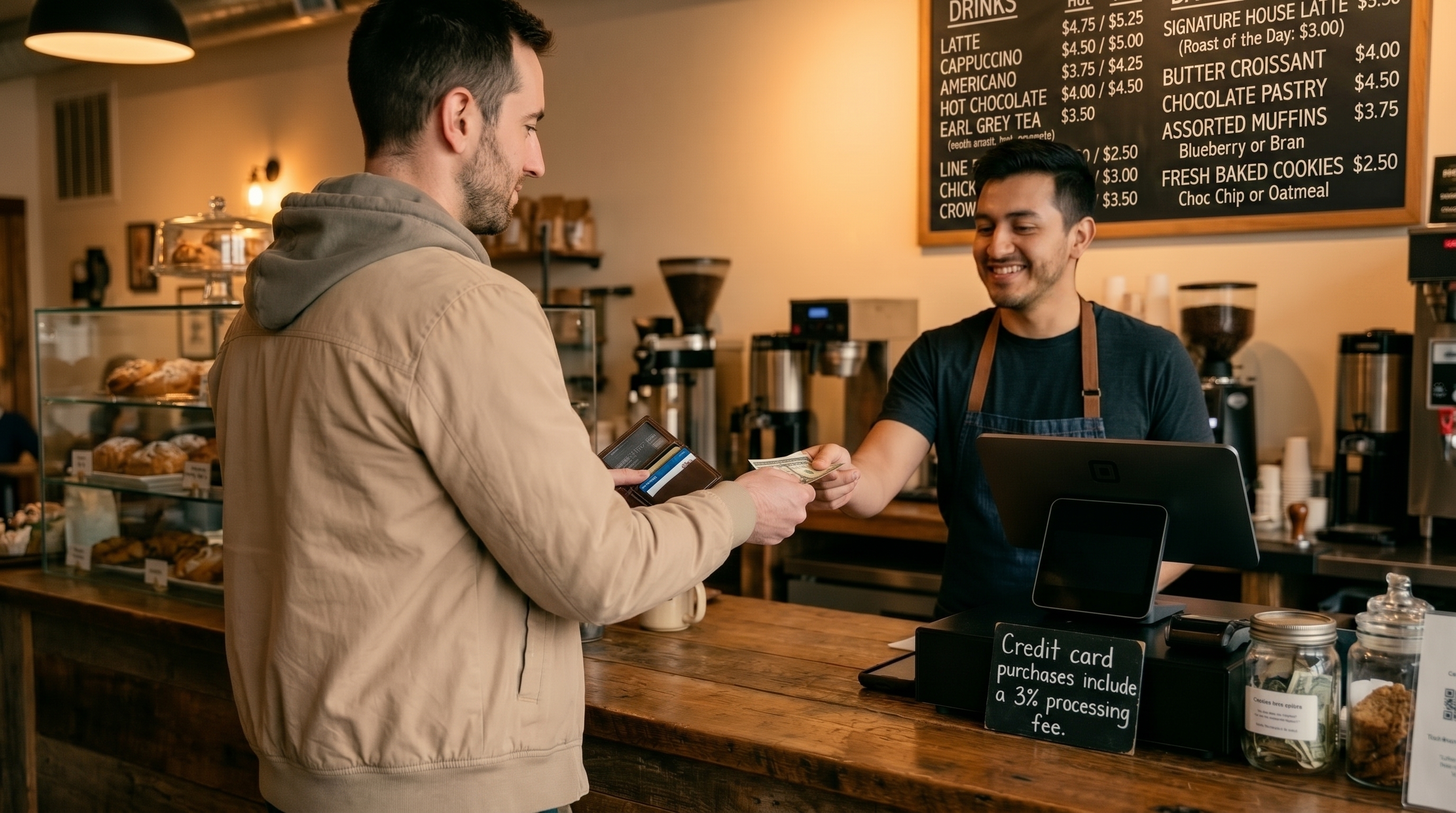
By 9:15, Jordan is in line at the coffee shop down the block.
It’s the kind of place he likes supporting. The owner is usually behind the counter. The pastries come from a bakery nearby. The playlist is always on point.
When he gets to the register, he reaches for his credit card out of habit. Then he sees the sign beside the card reader.
Credit card purchases include a 3% processing fee.
It’s not the first time he has seen a sign like that: restaurants, coffee shops, dry cleaners, the little hardware store near his apartment.
He thinks about using the card anyway. But coffee is not a rewards category for him. He is not earning meaningful points here, and the fee costs more than whatever reward he would get back.
So he grabs his wallet and pays with cash. It feels like the better choice, though he wonders whether places like this will ever offer a simpler digital option that skips the fee entirely.
Surcharges make the cost of credit visible.
For Jordan, a few extra cents can change how he thinks about the transaction. The card still offers convenience, but the reward feels less valuable when the cost is right in front of him.
It also changes how he thinks about the business. If paying cash helps a local shop avoid an extra cost, that matters to him.
This makes Jordan selective, not anti-credit.
Credit still has a role when rewards are clear and intentional. But for a small everyday purchase with a visible fee, convenience does not outweigh the cost.
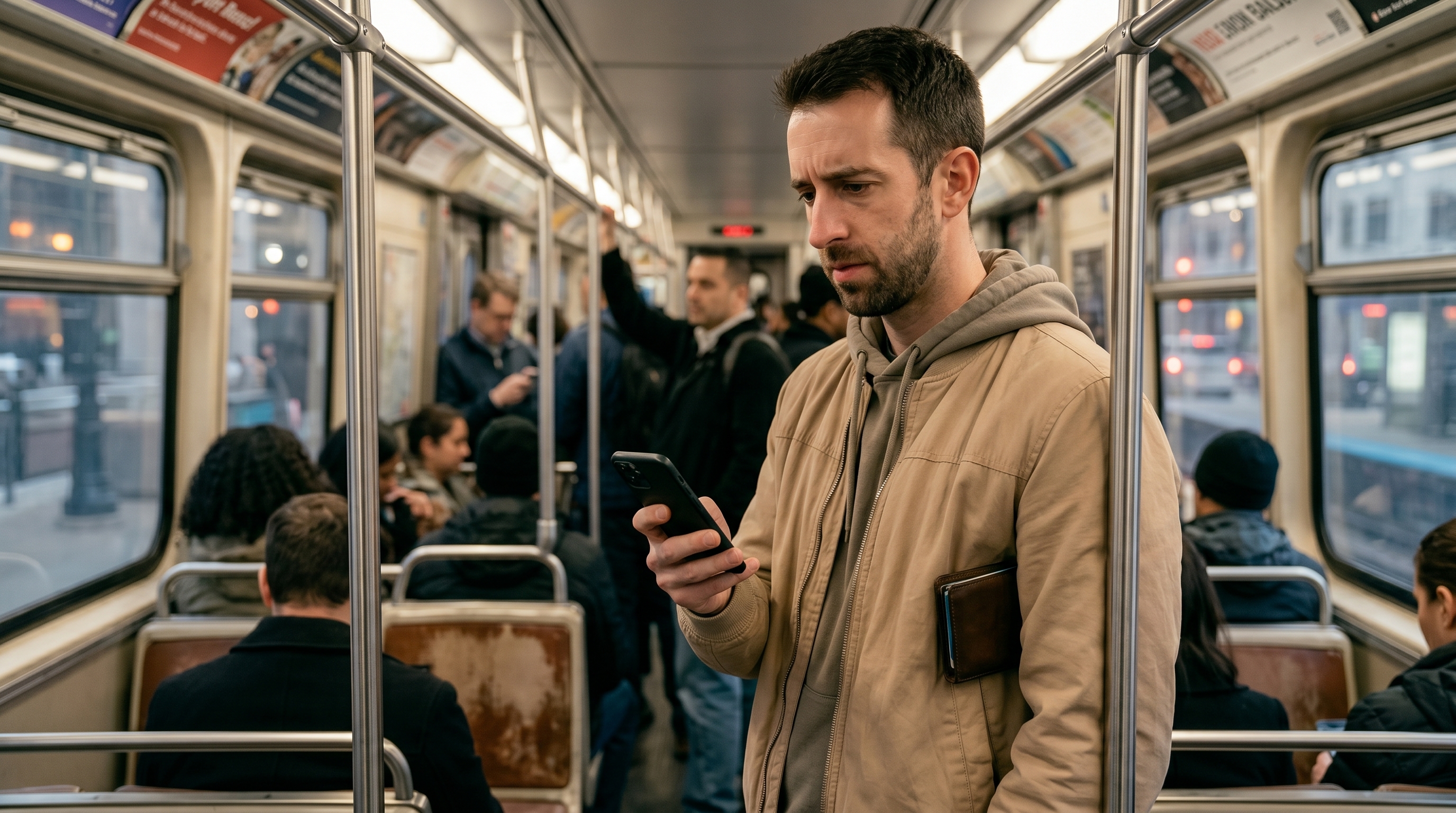
At lunch, Jordan takes the train to run an errand.
He’s scrolling on his phone when he sees a jacket he had been eyeing earlier in the week. It’s on sale now. Not a huge sale, but enough to make him pause.
He checks the size, adds it to his cart, and starts checking out.
Then things get a little harder.
Create an account. Enter shipping. Enter billing. Card number. Expiration date. CVV. The autofill pulls in an old address. The site asks for a verification code.
His wallet is in his bag, but pulling it out on a crowded train feels annoying and a little exposed.
He tells himself he will finish the purchase later.
Checkout friction does not always create immediate frustration. Sometimes it creates a delay. And delay can cost the sale.
When a customer says, "I'll do it later," they are not just pausing the transaction. They are reopening the decision. They can get distracted, reconsider the purchase, or find a similar product with a smoother checkout experience.
This is where digital payment choice matters. Digital wallets, saved checkout experiences, and pay by bank all solve for the same expectation: let me finish without making payment feel like a separate task.
Jordan wanted the jacket. Checkout gave him a reason to wait.
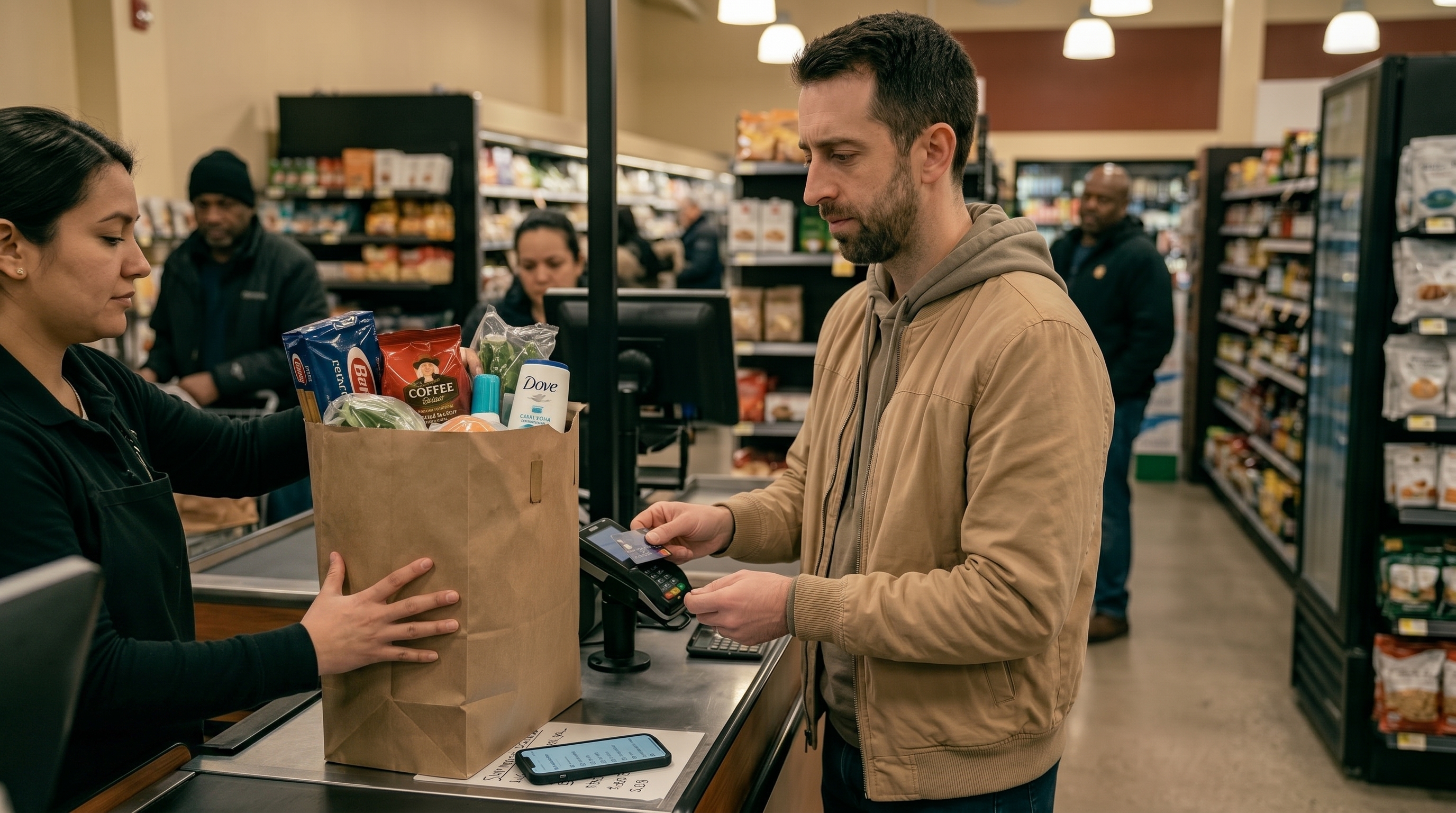
After work, Jordan stops for groceries.He and Maya are trying to cook at home more often. They are saving for a down payment, and delivery fees have become harder to justify. Still, the grocery store has a way of making even a reasonable list feel expensive.By the time Jordan gets to checkout, the total is higher than he expected.
He pays with a debit card, the way he and Maya agreed they would for groceries. It’s an intentional choice. The money comes out of the account they check every week, which helps them keep better track of what they are actually spending month to month.
For Jordan, that visibility matters. He has seen what bad credit can do. A few family members carried balances that became harder to manage over time, and he knows how quickly debt can stop feeling abstract when it starts shaping real choices.Groceries are not the kind of purchase he wants to push into next month.
Debit plays an important role in the payment mix because it gives customers a clearer view of their available funds.
That's especially true for younger consumers, who tend to be more cautious about traditional credit and rely on debit to stay closer to their actual spending.
For Jordan, staying close to his budget matters more than chasing rewards, especially if those rewards come with the risk of carrying a balance.
In this moment, debit gives him what he needs: a clear view of what he spent and what he has left.

That night, Jordan meets a few friends at a bar to watch the game.
A few minutes before tipoff, his buddy Marcus tells him about a bet he thinks has good value.
Jordan opens the app and funds his account directly from his bank. The payment goes through quickly enough for him to place the bet before the game starts.Later, the bet hits. It’s not life-changing money, but the whole table celebrates as if it were. Jordan cashes out and thinks about using the winnings to take Maya out later that week.
A few minutes later, he gets the confirmation. The money is already on its way back to his bank account.It’s a pleasant surprise for Jordan. The app did not just make it easy to put money in. It made it easy to bring money back.
In gaming, marketplaces, and other stored-balance experiences, customers notice what happens after the transaction.
Fast deposits help them participate in the moment. Fast payouts give them confidence that their money is still accessible when the moment is over.
If money moves in easily but comes out slowly, the experience can feel one-sided. When money moves both ways, the platform feels more useful, more transparent, and easier to trust.

Later that night, Jordan and Maya sit on the couch with one laptop between them.
They have been planning a trip to Singapore for a few weeks. They picked the dates, compared flights, debated whether the hotel was worth the extra thirty dollars a night, and talked through the budget more than once. Maya has a tab open with a list of neighborhoods. Jordan has been reading cancellation policies.
Before they book, they go through the details one more time. Nothing feels rushed. The trip fits the plan they already made.
So they purchase it with their travel card.
In this moment, credit feels simple. The rewards are worth it, the expense is expected, and they both know it will be paid off.
Credit still has a role in the payment mix.
For Jordan and Maya, the card makes sense when the reward is intentional, and the purchase has already been thought through. They're not using credit to make the trip feel affordable. They are using it because the card adds value to a decision they’ve already made.
That matters because not every payment moment is instant. Some happen after weeks of planning, research, and conversation.
In those moments, the right payment method gives customers confidence to follow through on a decision they already feel good about.
Payment friction does not always look like a failed transaction.
Sometimes it’s a surcharge that makes a customer rethink the cost. Sometimes it’s a checkout flow that asks too much at the wrong time. Sometimes it’s a delayed payout, or a payment method that does not match the moment.
That is why optionality matters.
Customers do not need every payment option every time. They need the right option when friction appears.
Fast, direct, reliable, and easy-to-manage payment methods give customers more control. They help bills get paid without maintenance, make digital checkout feel simpler, reduce the need for cash, and move money in both directions when speed matters.
Payments are one of the hardest things to make easy because “easy” changes with the moment.
The strongest payment experiences understand where friction shows up and give customers a better way through it.