How do high-risk merchants reduce chargebacks when card processors say no?
Risk
October 22, 2026
|
Aeropay Team

This article was written by the payments nerds at Aeropay. Our goal is to provide you with solid insights to help your business operationalize more efficient, value-focused payments.
US high-risk merchants reduce chargebacks by moving payments onto bank payments, which have no chargeback process. The risk that replaces it is the unauthorized ACH return, which a customer's bank can send up to 60 days after settlement. Verifying the account, checking the balance and scoring the payment before the debit keeps those returns down.
That trade is why bank payments are the usual answer when a card processor declines a merchant or caps its volume. The merchant swaps a dispute system it doesn't control for a return system with checks it can run before every debit.
Card processors decline or restrict merchants whose chargebacks, refunds or regulatory exposure threaten the processor's own standing with the card networks. Categories with high dispute rates, recurring billing or state-by-state legal status, such as online gaming and subscription services, get labeled high risk before a single payment runs.
Visa's monitoring program shows where that pressure comes from. Since April 1, 2026, Visa flags a US merchant as excessive once fraud reports and disputes reach 1.5% of its settled card-not-present transactions, with at least 1,500 such events a month. The acquirer is flagged far sooner: its whole portfolio counts as above standard at 0.5% and excessive at 0.7% (Visa VAMP fact sheet), so one high-dispute merchant can put the processor's own standing at risk.
Processors pass that risk on as higher rates, rolling reserves that hold back revenue, volume caps or a terminated account. A merchant in that position has two alternatives: a high-risk card processor, which accepts the category at higher cost, or bank payments, which move volume off card networks entirely.
No. A chargeback is a card network process, and a pay by bank payment never touches a card network. The customer's recourse is an ACH return, governed by Nacha's rules instead of card network rules.
Returns give a high-risk merchant more to work with than chargebacks do, because every return carries a code, a deadline and a published limit.
The threshold and the levels carry different weight. Crossing the 0.5% unauthorized threshold exposes the merchant's bank to Nacha enforcement until the rate comes down, while crossing a 3.0% or 15.0% level opens a preliminary inquiry rather than an automatic violation. Nacha's return-rate rules don't single out high-risk industries; they flag outlier merchants in any category (Nacha, ACH Network risk and enforcement topics). For how each return type maps to its limit, see is pay by bank secure for US businesses.
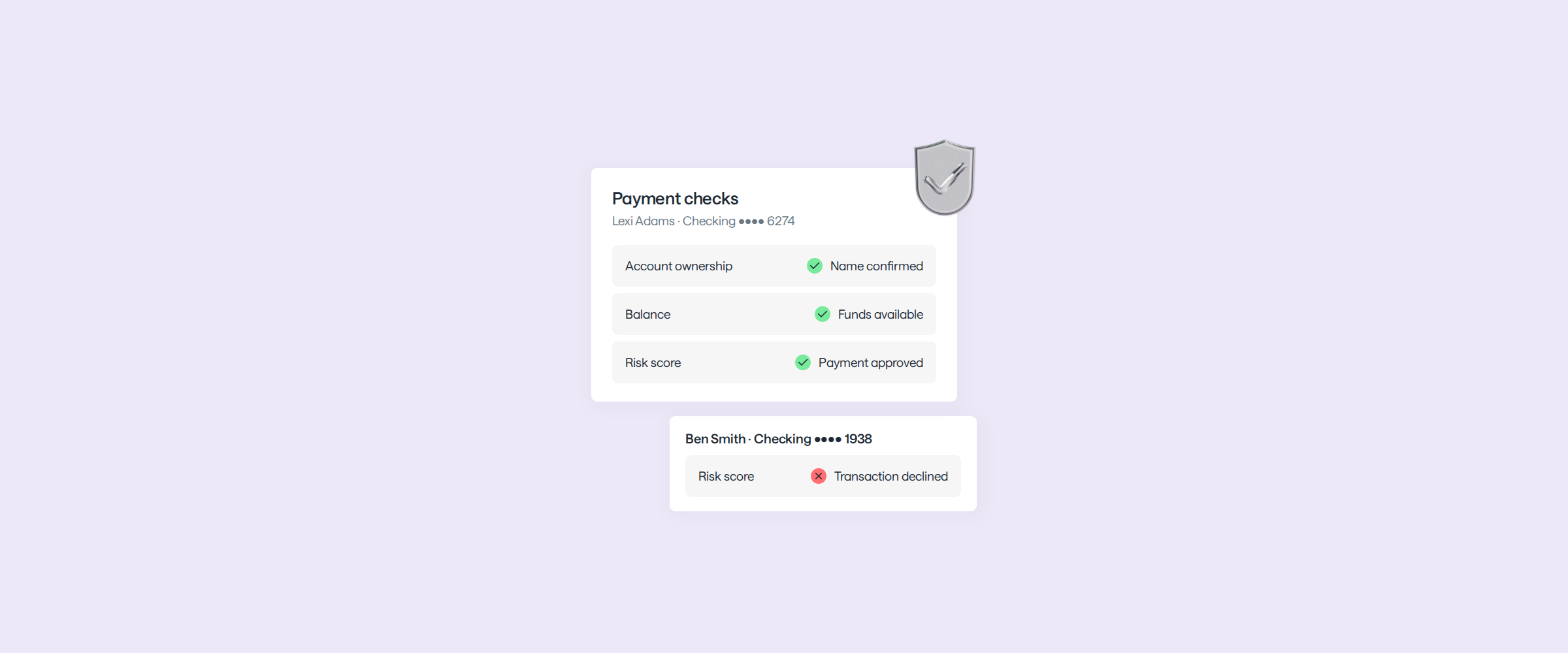
Stop each kind of bad payment before the debit, because every chargeback driver has a bank-payment equivalent with a check that catches it upstream.
Nacha now requires this kind of screening. Its fraud monitoring rules reached every non-consumer originator, regardless of volume, on June 22, 2026, and require risk-based procedures to catch unauthorized and fraud-induced payments, reviewed at least once a year. A business can rely on its payment provider's monitoring when the split is set by contract. What the rules require of each role is covered in is pay by bank secure for US businesses.
We built our risk tools in regulated industries such as gaming. Aeropay Guard scores each payment in real time for fraud and return risk before funds move, pairs its models with human fraud analysts, and gives merchants direct access to our fraud team when a new pattern shows up.
The ACH providers that work with high-risk businesses already process for regulated industries, route through more than one originating bank, and cover eligible returns. A provider new to high-risk volume learns on your returns, so ask questions that show whether it has run payments in your category before.
For the wider provider comparison, see how to choose a pay by bank provider in the US.
Yes, but the fraud checks have to move before the payout, because a payment over the RTP network is irrevocable once sent, and FedNow payments are final too. Which compliance obligations apply depends on your industry and the states you operate in, so confirm them with your compliance team and provider.
Two checks carry most of the fraud weight. Paying out to the same bank account the customer deposited from closes a common payout fraud, where winnings or refunds get redirected to an account the customer doesn't own. A balance and ownership recheck before a large payout catches an account that changed hands since signup.
The speed is real once those checks sit upstream. Trading platform Topstep cut trader payout times from 3 days to 9 seconds with Aeropay instant payouts (Topstep case study).
For how payouts move across rails, see ACH vs. RTP vs. FedNow. For a gaming example, see how gaming platforms cut failed deposits and pay out winnings faster.
Any pay by bank or ACH provider offers payments with no card chargebacks, because those payments never run on card networks. For high-risk merchants, providers differ in how they handle the returns that replace chargebacks. Ask which return types a provider's guarantee covers and up to what limit, and how it screens each payment before the debit.
Bank payments, including pay by bank and ACH, have no chargeback exposure, and real-time payments over RTP or FedNow are final once sent. Cash has none either but brings handling and security costs. The trade-off for bank payments is managing unauthorized returns.
No. Pay by bank sits alongside cards and wallets at checkout, so a merchant adds it without replacing its card processor or checkout flow, and moves volume over as customers choose it.
Request a payment assessment, and we'll show which of your chargeback drivers bank payments remove and which checks cover the rest.