
This article was written by the payments nerds at Aeropay. Our goal is to provide you with solid insights to help your business operationalize more efficient, value-focused payments.
Every industry has spent the last few years figuring out where AI actually helps. Payments turned out to be one of the clearer answers.
Machine learning (ML)—a subset of AI—ingests vast quantities of data to detect patterns, make predictions and optimize decisions in real time. Layered into financial technology, that unlocks compounding benefits for businesses, consumers and financial services.
Here's how machine learning is being used for better payments technology, plus Aeropay's approach to AI for smarter pay by bank transactions.
Basic forms of machine learning have been around and in use for decades.
Back in the '90s, early algorithm-based filters scanned emails, looking for certain words in order to calculate spam.
In the early 2000s, online retailers started using ML for personalized product recommendations.
What's new about machine learning models today is their ability to learn and improve upon themselves.
ML also processes far more data, makes real-time decisions and can adapt instantly to new patterns with minimal human intervention.
That combination is what makes it such a strong fit for payments.
Machine learning models work best when they're given access to well-structured data sets. The better the data, the more effective the output.
Those models can be layered into payments systems to improve transaction approvals, fraud prevention and financial automation.
A few places this shows up already:
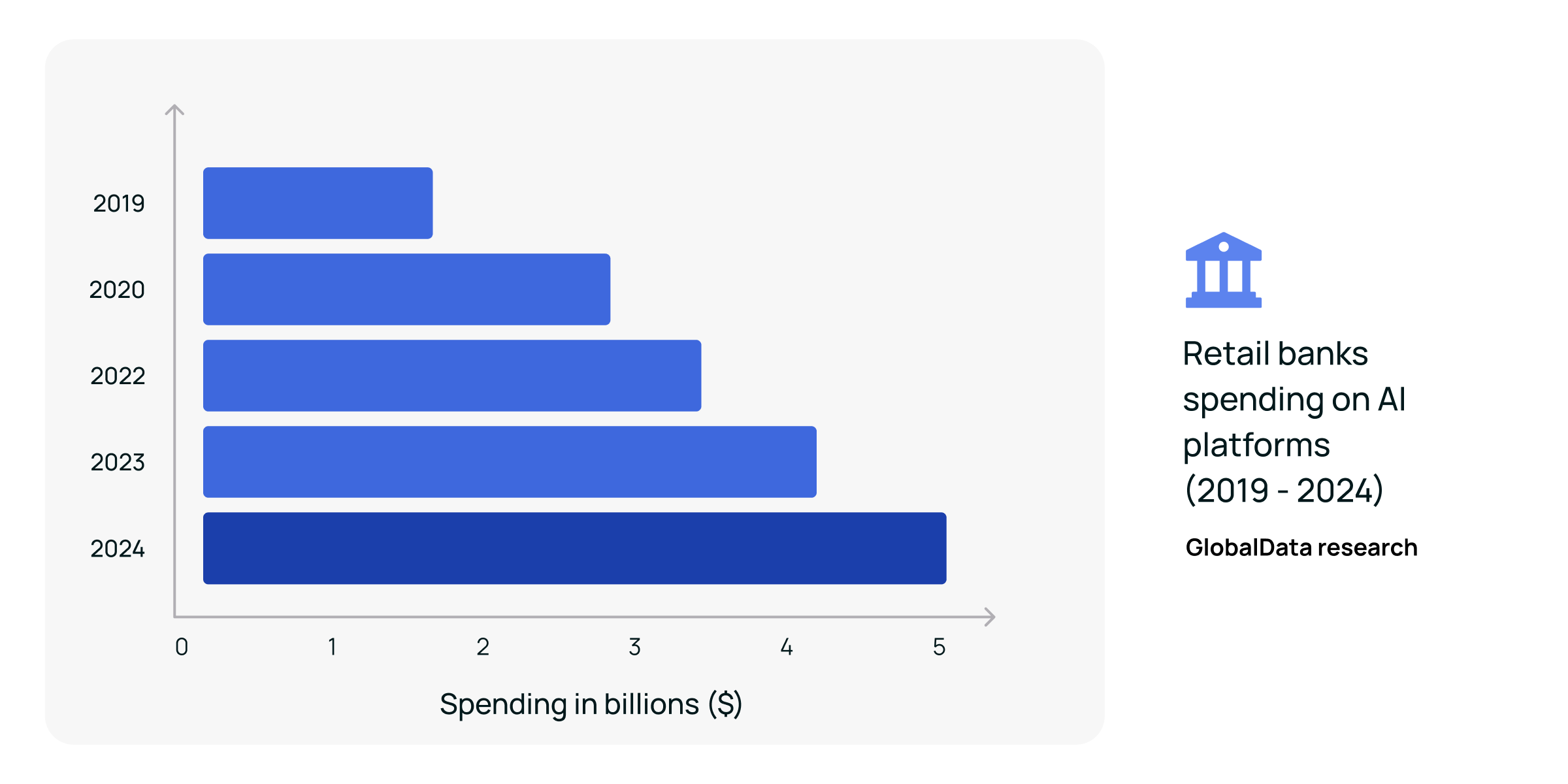
Retail banks spent $4.9 billion on AI platforms in 2024. That level of investment will greatly improve automation in what is a traditionally labor-intensive sector of the United States' financial infrastructure.
For example, the U.S. Department of the Treasury's Office of Payment Integrity began using machine learning AI to deal with increased fraud and improper payments, preventing and recovering over $4 billion in fiscal year 2024.
As AI becomes further realized across financial infrastructure, we will see an increase in automation that will ultimately help financial institutions better serve their customers.
In some cases, AI can be a double-edged sword. The technology enables faster innovation, and it also helps fraudsters develop more advanced schemes and bots.
Fraud prevention is evolving because fraudsters are using AI too. It's an arms race, but one that actually fuels innovation as more companies invest time and resources in AI to fight fraud.
Traditional fraud detection relies on binary, predefined rule-based algorithms that often fail to keep pace with new fraudulent tactics. Those systems also flag a high volume of legitimate transactions, which costs merchants real revenue.
Machine learning takes a different approach. It learns from transaction behaviors to recognize anomalies before a transaction is even processed, sifting through far more data than a rules-based system ever could and getting sharper over time. The result: fewer false positives, and more actual fraud caught.
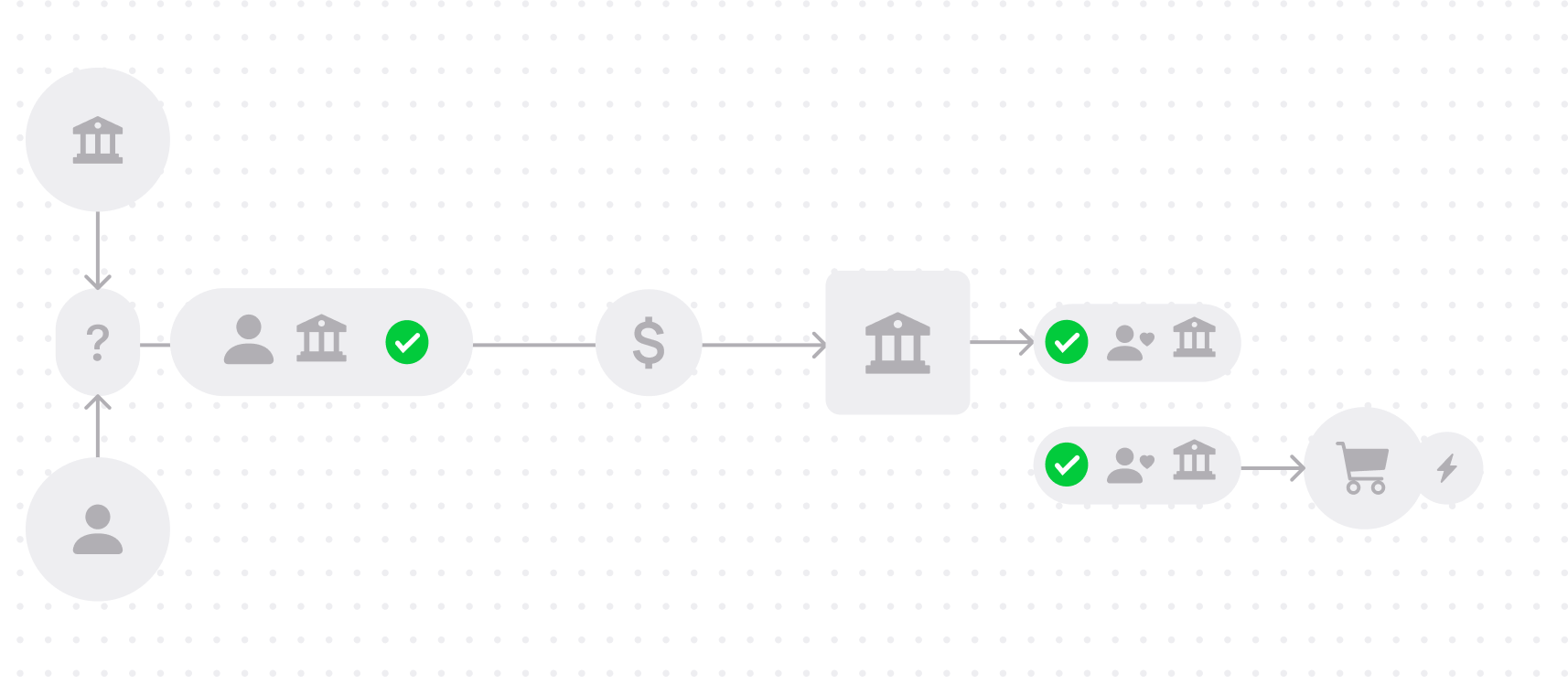
At its core, payment decision-making begins with a simple question:
Does the customer have sufficient funds to pay for this transaction?
That starting point seems basic, but has proven difficult for some providers to achieve at scale, particularly in guaranteed payment scenarios.
Guaranteed pay by bank historically saw a mere 40–60% average approval rate. Which is why Aeropay has specifically focused on building models that help balance risk and approval.
Guard, Aeropay's risk engine, uses machine learning to continuously adjust based on user activity across the entire network, including all merchants, multiple industries and each user's behaviors. The result is far lower return rates, alongside 90%+ approval rates.
Instead of simply rejecting borderline cases, Guard weighs additional signals (transaction history, spending patterns, real time account balances) before making a call.
See how Aeropay's machine learning models accurately approve over 90% of guaranteed pay by bank transactions.
AI improves the technology powering payments. For merchants, that shows up in the efficiency and cost of the payment methods they offer.
Specific benefits include:
AI has the capacity to both reduce manual tasks and optimize operations for payments:
AI can help merchants convert more customers and ensure funds are actually processed in a timely manner:
Machine learning models offer a smarter, automated approach to fraud detection and reduction:
Pay by bank combines instant account verification with modern ACH payment processing. Operationally, this involves connecting a consumer financial account using application program interfaces (APIs).
Instant bank linking unlocks real-time data which is used to initiate and authorize payments.

Historically, ACH payments were unpredictable. eChecks and wire transfers have limited standardization, risk assessment and data to support reliable transactions at scale.
Now, pay by bank solutions like Aeropay use robust bank connections and real-time data to enhance the entire end-to-end payment process. This provides businesses access to the affordable pricing of ACH processing, with a modern interface that protects revenue and improves payment experiences.
Using a proprietary suite of tools, including an aggregator designed to access structured data points, those models reduce returned or failed payments and optimize pay by bank transactions at scale.
AI thrives on structured data. The better the data, the better the decision-making.
Aeropay's framework works because the models learn and make decisions from the right data points.
Using structured financial data from consumer transactions across the Aeropay network, the platform makes real-time decisions that optimize each step in the payment journey.
Many pay by bank providers still rely on legacy verification methods like screen scraping or micro-deposits, leading to authentication failures and user friction.
Without the real-time insights that come from direct bank connections, these brittle solutions don't provide enough comprehensive information to make smart decisions.
To solve for this, Aeropay developed a proprietary data aggregator, called Aerosync. It onboards users in under 10 seconds, instantly linking their financial accounts using open APIs and instant account verification methods.
Aerosync collects real-time data using the most data-rich connection possible. That well-structured data is what enables the machine learning models to make accurate decisions at scale.
👀 See the best pay by bank solutions in the U.S.
Rather than collecting every available data point, which adds friction and cost, Aeropay's models analyze the inputs that actually predict whether a transaction will succeed:
Those inputs allow the A2A payments platform to intelligently determine transaction success over 90% of the time, on average. Decisions made by the models are fully transparent, with audit logs allowing businesses to review why transactions were approved or declined.
.png)
Each component of the Aeropay platform is designed and owned in-house. User bank authentication, account verification, money movement and settlement are handled within the same system, which streamlines payment efficiency and reduces failures.
Aeropay owns its network, which means the data points feeding those models keep improving. As more merchants come on across new verticals, the models continue to sharpen.
AI doesn't operate in isolation, which is why Aeropay builds merchant-specific guardrails that tailor verification and detection to industry-specific patterns.
For merchants, that adds up to increased user conversion, a better customer experience, and noticeable operational efficiency across the payments journey.
Curious what this looks like on your payment stack? Talk with us.